01 · The Reframe
RBQM alerts come late. Issues have been building since startup.

CEO Joel Selzer is joining the Integrated Risk Mitigation panel Tuesday at 4:50 PM
Most programs catch execution risk after it surfaces. There's an earlier signal. Most operating models aren't built to read it.
By the time deviations and delays surface in your monitoring data, the underlying cause has been building since site initiation. The window to act has already closed. Readiness signals appear earlier — during the SIV — when there's still time to intervene.
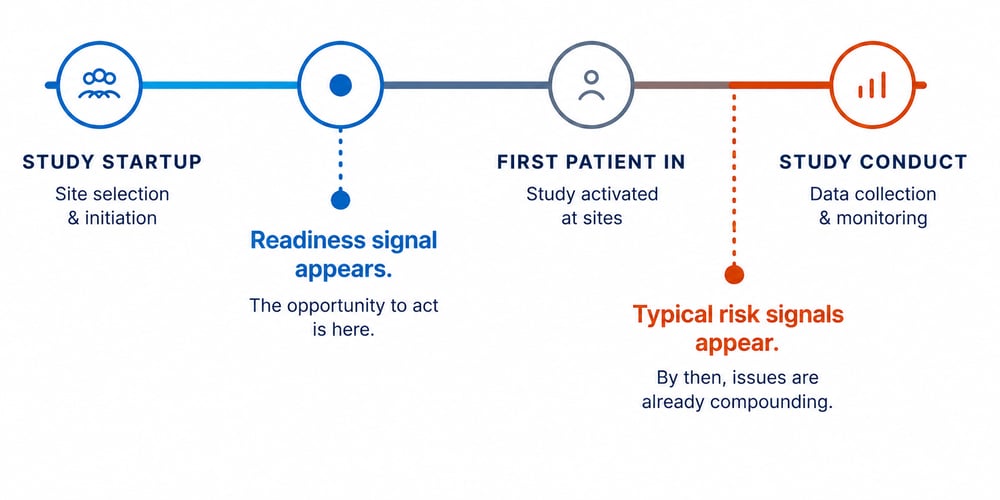
Confidence and comprehension gaps are measurable before first patient in — when corrective action is still possible.
Protocol deviations, query rates, and enrollment delays surface downstream — after the cause has compounded.
ICH E6(R3) raises the bar: verify readiness, not training completion. A site team that has completed required training may still lack the confidence and comprehension to execute the protocol correctly. That gap is measurable — and predictive.
Ready is a behavioral science-based readiness intelligence platform that does two things simultaneously: it delivers more effective training — improving how teams understand and execute the protocol — while generating the site readiness signals your program needs before first patient in.
Confidence-Based Assessment (CBA) captures not just what site staff know, but how confident they are in that knowledge. The combination predicts performance far more accurately than completion data alone.

"It's almost not worth funding programs that aren't powered by Ready…"Executive Director · Top-20 Pharma
Ready is built on evidence, not intuition. The behavioral and learning sciences have spent decades establishing what actually predicts human performance: not whether training was completed, but the quality of what was learned, how confidently it's held, and how reliably it transfers to practice under pressure.
ArcheMedX has applied that body of research to the specific context of clinical trial site readiness. The underlying science spans cognitive psychology, self-efficacy theory, metacognition, and behavior change. The dataset behind Ready reflects more than 100 million modeled behavioral data points generated by over 300,000 clinical professionals across 90+ countries.
The finding is consistent: confidence calibration during training is a leading indicator of downstream execution risk. Sites that complete passive training are not necessarily sites that are ready. The gap between the two is measurable before first patient in. Ready is proven to increase trial performance and mitigate study risks.
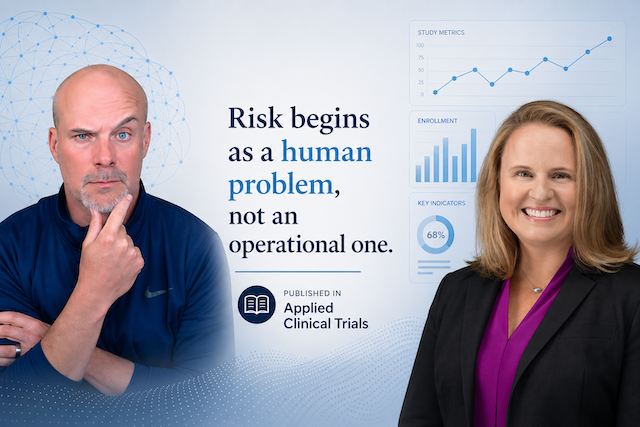
The Earliest Warning Sign: Measuring Risk in Clinical Trials by McGowan & Ritch - Applied Clinical Trials
Let's connect for a conversation while we are in Boston