EXPLORE THE RESEARCH
POSTER SESSIONS
See new data from a global Phase II CNS study demonstrating how structured, role-specific learning and behavioral measurement can improve readiness before execution begins.
Monday + Tuesday | 5pm - 7pm

ARCHEMEDX AT CNS SUMMIT | November 1-4
The conversations at CNS Summit are increasingly moving from what is possible to what actually works in execution.
And that raises two questions sponsors keep coming back to:
How do we move faster without adding to site burden?
How do we get earlier visibility into the risks that determine whether a trial delivers?
Neither is simply a technology question. Both come down to how prepared people are to perform their roles on a study.
I’ll be at CNS Summit November 1–4, presenting new research, hosting a small trial leader dinner and meeting with sponsors throughout the Summit.
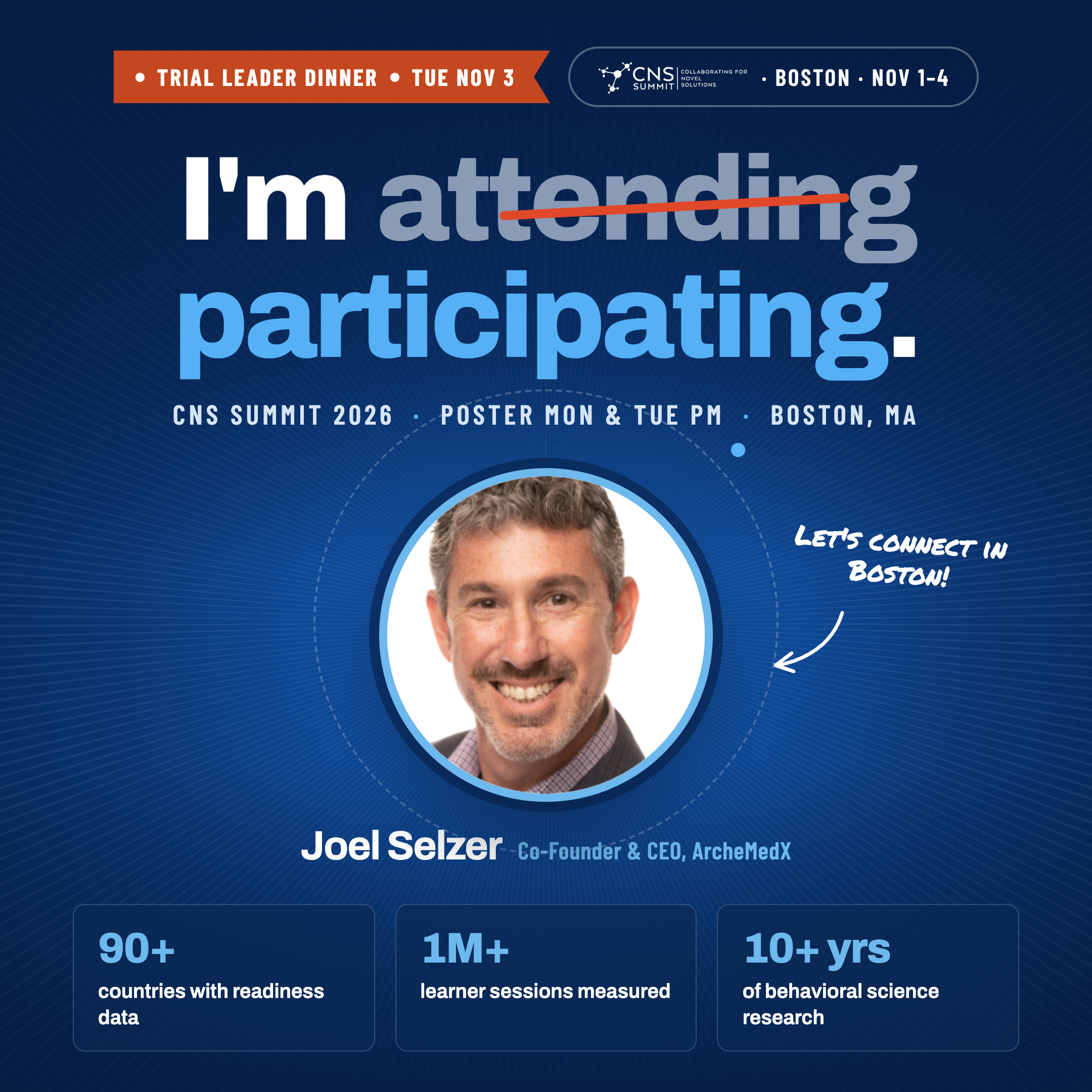
POSTER SESSIONS
See new data from a global Phase II CNS study demonstrating how structured, role-specific learning and behavioral measurement can improve readiness before execution begins.
Monday + Tuesday | 5pm - 7pm
TRIAL LEADER DINNER
Join a small group of clinical trial leaders for dinner and candid conversation at Mystique, in Encore Boston Harbor. Spots fill up fast, request an invitation below.
Tuesday, November 3 | 6:45pm
MEET 1:1
Want to talk about trial readiness, improving rater training, or identifying risk signals earlier in your studies? Joel will be meeting with trial leaders throughout the Summit.
November 1–4 | Encore Boston Harbor
Most programs catch execution risk after it surfaces. There's an earlier signal. Most operating models aren't built to read it.
By the time deviations and delays surface in monitoring data, the underlying cause has been building since site initiation. The window to act has already closed. Readiness signals appear earlier, during startup and at the SIV, when there is still time to intervene.
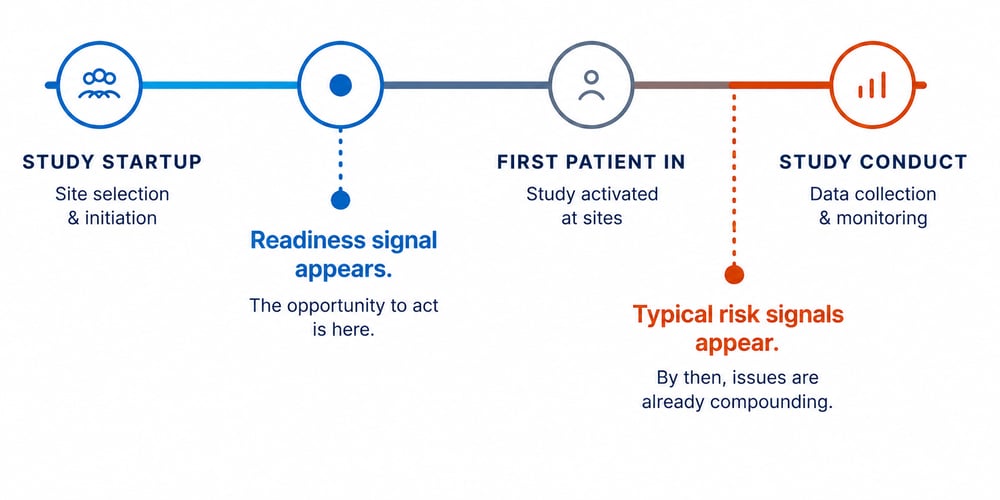
Confidence and comprehension gaps are measurable before first patient in, when corrective action is still possible.
Protocol deviations, query rates, and enrollment delays surface downstream, after the cause has compounded.
Clinical trials generate enormous amounts of data once execution begins. Enrollment rates, deviations, queries, monitoring findings and quality events all reveal where a study is struggling.
The problem is timing. By the time those signals appear, sites are already enrolling patients and the study may already be absorbing the consequences.
Readiness provides an earlier signal.
By measuring not only whether study teams completed training, but whether they actually understand the protocol-critical concepts required for their role, sponsors can identify where knowledge is strong, where uncertainty remains and where confidence may exceed competence.
Those signals become actionable during startup, before operational performance reveals the same risks downstream.
What that produces: The result is an early, role-level view of readiness across sites and regions, allowing study teams to identify risk sooner, target intervention where it is needed and make more informed decisions before enrollment begins.
The Ready platform combines role-specific study preparation with behavioral measurement to do two things at once: better prepare teams to execute the protocol and surface readiness risk before enrollment begins.
Confidence-Based Assessment measures more than whether someone answered correctly. Each response is paired with a confidence measure, distinguishing correct and confident mastery from correct answers accompanied by uncertainty and incorrect answers held with high confidence.
That distinction matters. Completion tells you whether training happened. Readiness data shows you where understanding is strong and where human execution risk may still exist.
The same training activity powered by Ready therefore does two jobs: it better prepares teams to execute the protocol while giving sponsors an earlier signal of where targeted intervention may be warranted.

"This training platform helps you actually know if staff absorbed the material and allows individuals to learn at their own pace. Then when you conduct the tailored SIV you feel confident that everyone has trained and can focus the SIV on issues of confusion to answer all of the questions and interact as much as possible."VP Clinical Operations · Rare Disease Biotech
At CNS Summit, Joel Selzer will present new research from a global Phase II dementia study examining how a structured, role-specific learning experience changed participant understanding across six protocol-critical activities.
The findings demonstrate how study preparation can do more than document training. It can measurably improve understanding while providing sponsors with earlier visibility into human execution risk. And the pattern extends well beyond a single study.
80% of sites complete training and activation in under two weeks; 90% within three
96% of site personnel report Ready better prepared them to screen and enroll patients sooner
100% of sponsors and CROs who deploy Ready expand its use across additional teams and studies
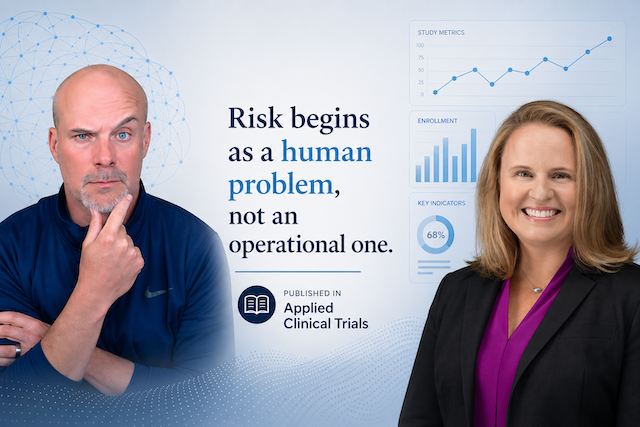
Why do well-written protocols still lead to inconsistent execution?
In The Human Side of Clinical Trials, a new podcast hosted by Applied Clinical Trials, ArcheMedX leaders Dr. Brian McGowan and Kelly Ritch explore the behavioral science behind trial readiness and how sponsors can identify human performance risk before it affects execution.
Why Fuzzy Mental Models Undermine Clinical Trial Execution
Brian and Kelly are joined by behavioral scientist Jason Riis, PhD, to explore why familiarity is often mistaken for understanding, how incomplete mental models affect trial execution and why better preparation must account for how people actually think and learn.
Join clinical trial leaders for an evening focused on building connections and exchanging insights at an exclusive networking dinner hosted by ArcheMedX CEO, Joel Selzer, on Tuesday, November 3 at Mystique in the Encore.
Let's connect for a conversation while we are in Boston